Your kitchen drying mat is a hard-working essential, constantly exposed to moisture, food particles, and the perfect breeding ground for bacteria and mold. While it helps keep your countertops dry and dishes sparkling, an unsanitized mat can quickly become a hidden source of germs and unpleasant odors. Luckily, for certain types of drying mats, your microwave offers a surprisingly effective and quick method for deep sanitization, transforming your mat from a bacterial haven to a hygienic helper. This guide will walk you through the safe and efficient way to sanitize your microfiber drying mat using the power of your microwave, ensuring your kitchen remains a clean and healthy environment.
The Science Behind Microwave Sanitization for Fabric Mats
Microwave sanitization for fabric-based drying mats, like those made from microfiber, harnesses the power of heat and steam to eradicate common kitchen germs. When a thoroughly wet mat is microwaved, the water within its fibers rapidly heats up, producing steam. This intense heat and steam penetrate deep into the fabric, effectively killing bacteria, viruses, and mold spores that thrive in damp conditions. Studies have shown that microwaving can significantly reduce the bacterial load on absorbent materials, making it a powerful tool in your cleaning arsenal. This method is particularly efficient for fabric mats that absorb and retain moisture, as the water acts as the medium for heat transfer, ensuring comprehensive sanitization.
Why Sanitize Your Drying Mat?
Regular sanitization of your drying mat is crucial for maintaining a hygienic kitchen. Over time, mats can accumulate bacteria and fungi from dishes, food scraps, and ambient kitchen moisture. This buildup not only leads to unpleasant musty odors but can also pose health risks by transferring germs back to freshly washed items or surfaces. Sanitizing your mat helps to:
- Prevent bacteria and mold growth: Eliminating microorganisms before they can multiply.
- Eliminate odors: Tackling the root cause of stale or sour smells.
- Maintain overall kitchen hygiene: Contributing to a cleaner and safer food preparation area.
- Extend the mat’s lifespan: Preventing the degradation of fibers caused by microbial activity.
|
Our Picks for the Best Kitchen absorbent mat in 2026
As an Amazon Associate I earn from qualifying purchases.
|
||
| Num | Product | Action |
|---|---|---|
| 1 | GORILLA GRIP Ultra Water Absorbent Microfiber Dish Drying Mat, Quick Dry Thick Mesh, Slip Resistant Pad for Sink Dishes or Under Rack, Kitchen Counter Accessories, Machine Wash Mats, 18x16 Inch, Black |

|
| 2 | YDKGL Water Absorbent Runner Rugs for Kitchen, Kitchen Mat in Front of Sink, Oil Absorbent Kitchen Mats for Floor,Non-Slip Kitchen Rugs,Durable Kitchen Mats,17x30 Gray Kitchen Rugs, |
|
| 3 | HotLive Dish Drying Mat for Kitchen Counter, Heat Resistant Drainer Mats with Non-slip Rubber Backed, Hide Stain Kitchen Super Absorbent Draining Mat, Easy to Clean Dish Rack Pad, Dark Grey 16"x18" |
|
| 4 | GORILLA GRIP Ultra Water Absorbent Microfiber Dish Drying Mat, Quick Dry Thick Mesh, Slip Resistant Pad for Sink Dishes or Under Rack, Kitchen Counter Accessories, 16x18, Machine Wash Mats, Gray |
|
| 5 | Ecotrim - Dish Drying Mat for Kitchen Counter | Coffee Bar Mat for Countertops | Heat Resistant Drainer Mat with Non-slip Rubber Backed | Hide Stain Kitchen Absorbent Draining Mat | Dark Grey 16"x18" |
|
| 6 | WISELIFE Dish Drying Mat Super Absorbent Drying Mat Large Dish Drying Mats for Kitchen Counter Easy Clean Dish Mat Kitchen Drying Mat15"x 18" Stylish Grey |
|
| 7 | AMOAMI Dish Drying Mat for Kitchen Counter-Coffee Mat Bar Accessories, Hide Stain, Rubber Backed, Absorbent, Fit Under Coffee Maker, Espresso Machine, Pot, Dish Rack, 12"x19", Dark Grey |
|
| 8 | StepRite Kitchen Mats, 2PCS Kitchen Rugs, Cushioned Anti Fatigue Kitchen Mats for Floor, Non-Slip Standing Desk Mat, Waterproof Kitchen Rug Set for Kitchen, Floor, Office, 17.3"x30"+17.3"x47", Black |
|
| 9 | YDKGL Kitchen Rugs Mat Non Slip Washable, Super Absorbent Kitchen Mats for Floor, Rubber Backing Soft Braided Standing Floor Mats Sink Mat Runner Rug, Easy to Clean and Maintain, Brown 17"x30" |
|
| 10 | S&T INC. Dish Drying Mat XL, 18” x 24”, Absorbent Microfiber Kitchen Counter Mat, Dish Drying Pad for Dishes, Utensils, Pots and Pans, Extra Large, Charcoal |
|
Preparing Your Microfiber Drying Mat for Microwave Sanitization
Before placing your microfiber drying mat in the microwave, proper preparation is essential to ensure both effectiveness and safety. Begin by giving your mat a good shake or a quick rinse under running water to remove any loose food particles, crumbs, or debris. For visible stains or heavier grime, a gentle hand wash with a little dish soap is advisable. The most critical step is ensuring your mat is thoroughly saturated with water. This isn’t just for cleaning; it’s a vital safety measure. Microwaving a dry or even merely damp fabric item can be a significant fire hazard, as dry material can scorch or ignite quickly under microwave energy. Squeeze out excess water so the mat is wet but not dripping, and then proceed.
Step-by-Step Guide to Microwaving Your Microfiber Drying Mat
Sanitizing your microfiber drying mat in the microwave is a straightforward process when done correctly.
- Ensure the Mat is Wet: As previously emphasized, fully saturate your microfiber drying mat with water. Wring it out gently so it’s wet but not dripping. This moisture is crucial for creating the steam that sanitizes and prevents the mat from catching fire.
- Place in the Microwave: Fold or roll your wet mat to fit comfortably on the microwave’s turntable. Ensure it’s not touching the sides of the microwave.
- Microwave on High: Set your microwave to its highest power setting. For a standard-sized microfiber drying mat, microwave for 1 to 2 minutes. Smaller mats might need less time (e.g., 30-60 seconds), while larger or thicker mats might benefit from closer to 2 minutes. The goal is to generate ample steam.
- Listen and Observe: During microwaving, you should hear the water boiling and see steam forming inside the microwave. If you notice any smoke or unusual odors, immediately stop the microwave.
- Allow to Cool: Once the microwaving cycle is complete, do not immediately remove the mat. The mat and the steam will be extremely hot. Leave the mat inside the closed microwave for several minutes to allow it to cool down and the trapped steam to continue its sanitizing action.
- Carefully Remove and Dry: Using oven mitts or tongs, carefully remove the hot mat from the microwave. It will still be very hot. Allow it to air dry completely in a well-ventilated area. You can hang it up or lay it flat on a clean surface.
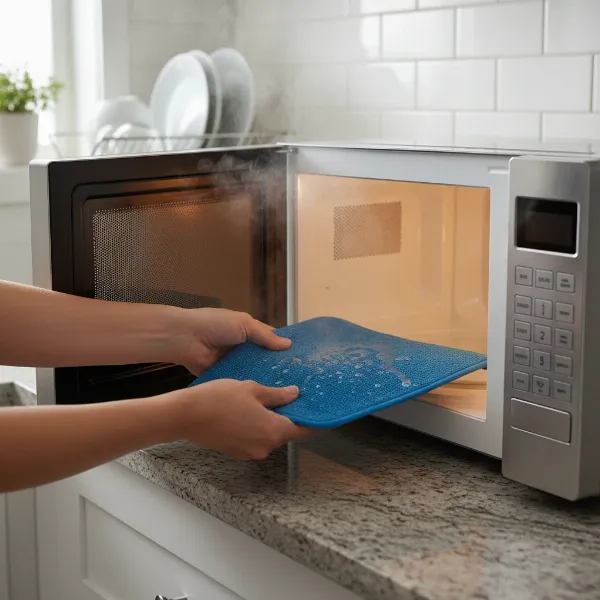 A wet microfiber drying mat being placed inside a clean microwave for sanitization, with visible steam
Important Safety Precautions
When using your microwave for sanitization, safety is paramount. Adhering to these precautions will help prevent accidents and ensure effective cleaning:
- Never Microwave a Dry Mat: This is the most critical rule. Microwaving a dry fabric item can quickly lead to scorching, melting, or even fire. Always ensure the mat is thoroughly wet.
- Only for Microfiber and Similar Fabric Mats: This method is specifically for absorbent, fabric-based drying mats that can hold enough water to generate steam. Do not attempt this with mats made from other materials unless explicitly stated by the manufacturer.
- Check Manufacturer’s Instructions: Always consult the care label or manufacturer’s guidelines for your specific drying mat. If it advises against microwaving or uses materials that could melt, deform, or pose a fire risk (like metallic threads), choose an alternative cleaning method.
- Monitor Closely: Never leave the microwave unattended while sanitizing your mat. Stay nearby to observe the process and react quickly if any issues arise.
- Beware of Heat and Steam: The mat and the microwave interior will be extremely hot after the cycle. Use oven mitts or tongs when handling the mat, and allow time for cooling before removal.
When Not to Microwave Your Drying Mat: Material Matters
While microwaving is an effective sanitization method for certain materials, it is crucial to understand that it is not suitable for all types of drying mats. Using the wrong method can lead to damage, ineffective cleaning, or even safety hazards.
Silicone Drying Mats: Proceed with Caution (or Avoid)
Silicone drying mats are popular for their durability and heat resistance, often advertised as oven or dishwasher safe. However, there is conflicting advice regarding microwaving them for sanitization. While some silicone products are designed for microwave use (like trivets or splatter guards), larger silicone dish drying mats may not be intended for this purpose. Some manufacturers explicitly state that their silicone drying mats are “not designed to be used in the microwave.” The concern isn’t necessarily melting, as food-grade silicone is heat-resistant, but rather potential material degradation over time or uneven heating which could affect the mat’s integrity without effectively sanitizing it. Unless your silicone drying mat’s manufacturer explicitly states it is safe for microwave sanitization, it’s safer to avoid this method. Opt for alternative cleaning methods like hand washing with soap and hot water or running it through the dishwasher.
Diatomaceous Earth Mats: A Strict No-Go
Diatomaceous earth drying mats are prized for their rapid absorption and natural anti-mold properties. However, these mats should never be microwaved. Diatomaceous earth is a brittle, porous material that can crack, warp, or even shatter when exposed to the intense, uneven heat of a microwave. Microwaving these mats is a “one-way ticket to disaster,” severely shortening their lifespan and rendering them unusable. For cleaning diatomaceous earth mats, stick to gentle methods such as rinsing with water, wiping with a damp cloth, using a mild vinegar or baking soda solution for stains, and always allowing them to air dry completely in a well-ventilated area. Some even come with a sanding tool to refresh the surface.
Beyond the Microwave: Alternative Sanitization Methods
While microwave sanitization is excellent for suitable fabric mats, having alternative methods ensures all your drying mats stay clean and hygienic.
- Machine Washing (for Fabric Mats): For microfiber and cotton drying mats, a regular machine wash is often the simplest and most effective cleaning method. Use hot water and your usual laundry detergent. For extra sanitization, you can add a color-safe bleach or a laundry sanitizer. Always air dry or tumble dry on a low setting according to the mat’s care instructions.
- Dishwasher (for Silicone Mats): Most silicone drying mats are dishwasher safe. Place them on the top rack for a thorough cleaning cycle. The hot water and detergent in a dishwasher can effectively clean and sanitize the silicone surface. Ensure they are fully dry before storing.
- Bleach Solutions (Diluted): For highly soiled or odoriferous fabric mats, a diluted bleach solution can provide powerful sanitization. Mix 1 tablespoon of bleach per gallon of water. Soak the mat for 5-10 minutes, then rinse thoroughly and machine wash. Always test on an inconspicuous area first to ensure colorfastness and avoid using bleach on non-bleachable materials or colored microfiber, as it can cause damage.
- Air Drying in Sunlight: The sun’s UV rays are a natural disinfectant. After washing any type of drying mat, allowing it to air dry in direct sunlight can help kill remaining bacteria and remove odors. This is particularly beneficial for diatomaceous earth mats.
Maintaining a Hygienic Drying Mat
To keep your drying mat performing its best and your kitchen truly clean, ongoing maintenance is key.
- Regular Cleaning Schedule: Implement a routine for sanitizing your drying mats, ideally once or twice a week, depending on usage. More frequent cleaning may be necessary in busy households or if you notice odors or visible grime.
- Proper Drying After Each Use: Never leave a wet drying mat crumpled up or in a poorly ventilated area. Always hang it or lay it flat to air dry completely after each use. This prevents moisture buildup, which is the primary cause of bacterial and mold growth.
- Rotate Mats: Consider having two or more drying mats so you can rotate them, allowing one to fully dry or be laundered while the other is in use.
- Storage Tips: Once completely dry, store your mat in a clean, dry, and well-ventilated space. Avoid storing damp mats in enclosed cabinets, as this encourages mildew.
Conclusion
Maintaining a clean and hygienic kitchen extends beyond sparkling countertops and spotless dishes; it includes frequently used items like your drying mat. While the microwave offers a quick and effective sanitization method for microfiber drying mats, it’s crucial to understand material compatibility to avoid damage and ensure safety. Always ensure fabric mats are thoroughly wet before microwaving, and strictly avoid this method for silicone (unless specified by the manufacturer) and, especially, diatomaceous earth mats. By choosing the right sanitization method for your mat’s material and incorporating regular cleaning practices, you can confidently keep your kitchen drying mats fresh, germ-free, and ready to tackle your daily dishwashing needs. What is your go-to method for keeping your kitchen drying mat spotless?
Frequently Asked Questions
How often should I sanitize my drying mat?
For optimal hygiene, it’s recommended to sanitize your fabric drying mat at least once or twice a week, especially with daily use. If your kitchen is particularly busy or if you notice any odors or visible grime, more frequent sanitization is advisable to prevent bacterial buildup.
Can I microwave a damp (not wet) mat?
No, it is highly unsafe to microwave a damp or dry fabric mat. The lack of sufficient moisture can cause the fabric to overheat rapidly, scorch, melt, or even catch fire. Always ensure your microfiber drying mat is thoroughly saturated with water before microwaving for sanitization.
What if my mat is too big for the microwave?
If your microfiber drying mat is too large to fit safely and comfortably in your microwave, consider alternative sanitization methods. Machine washing with hot water and detergent, possibly with a laundry sanitizer or color-safe bleach, is an excellent and effective option for larger fabric mats.