Are you tired of cluttered countertops and soggy messes after washing a mountain of pots, pans, and oversized dishes? The struggle to find adequate drying space for large kitchenware is real, but a high-quality large size drying mat can revolutionize your kitchen cleanup. These versatile mats offer an efficient, hygienic, and space-saving solution, transforming your post-meal routine from a chaotic chore into a streamlined process. Join us as we explore the world of large drying mats to help you select the perfect one that blends functionality with your kitchen’s aesthetic.
Large Size Drying Mats for Pots and Pans: The Solution for a Dry and Safe Kitchen
A well-chosen large size drying mat is more than just a kitchen accessory; it’s an essential tool for maintaining a clean, organized, and safe culinary environment. Designed to handle the biggest and bulkiest items, these mats provide a dedicated space for air-drying, protecting your surfaces and streamlining your workflow.
Why Use a Large Drying Mat for Pots and Pans?
|
Our Picks for the Best Kitchen absorbent mat in 2026
As an Amazon Associate I earn from qualifying purchases.
|
||
| Num | Product | Action |
|---|---|---|
| 1 | GORILLA GRIP Ultra Water Absorbent Microfiber Dish Drying Mat, Quick Dry Thick Mesh, Slip Resistant Pad for Sink Dishes or Under Rack, Kitchen Counter Accessories, 16x18, Machine Wash Mats, Gray |

|
| 2 | GORILLA GRIP Ultra Water Absorbent Microfiber Dish Drying Mat, Quick Dry Thick Mesh, Slip Resistant Pad for Sink Dishes or Under Rack, Kitchen Counter Accessories, Machine Wash Mats, 18x16 Inch, Black |
|
| 3 | Ecotrim - Dish Drying Mat for Kitchen Counter | Coffee Bar Mat for Countertops | Heat Resistant Drainer Mat with Non-slip Rubber Backed | Hide Stain Kitchen Absorbent Draining Mat | Dark Grey 16"x18" |
|
| 4 | AMOAMI Dish Drying Mat for Kitchen Counter-Coffee Mat Bar Accessories, Hide Stain, Rubber Backed, Absorbent, Fit Under Coffee Maker, Espresso Machine, Pot, Dish Rack, 12"x19", Dark Grey |
|
| 5 | YDKGL Kitchen Rugs Mat Non Slip Washable, Super Absorbent Kitchen Mats for Floor, Rubber Backing Soft Braided Standing Floor Mats Sink Mat Runner Rug, Easy to Clean and Maintain, Brown 17"x30" |
|
| 6 | S&T INC. Dish Drying Mat XL, 18” x 24”, Absorbent Microfiber Kitchen Counter Mat, Dish Drying Pad for Dishes, Utensils, Pots and Pans, Extra Large, Charcoal |
|
| 7 | StepRite Kitchen Mats, 2PCS Kitchen Rugs, Cushioned Anti Fatigue Kitchen Mats for Floor, Non-Slip Standing Desk Mat, Waterproof Kitchen Rug Set for Kitchen, Floor, Office, 17.3"x30"+17.3"x47", Black |
|
| 8 | HotLive Dish Drying Mat for Kitchen Counter, Heat Resistant Drainer Mats with Non-slip Rubber Backed, Hide Stain Kitchen Super Absorbent Draining Mat, Easy to Clean Dish Rack Pad, Dark Grey 16"x18" |
|
| 9 | WISELIFE Dish Drying Mat Super Absorbent Drying Mat Large Dish Drying Mats for Kitchen Counter Easy Clean Dish Mat Kitchen Drying Mat15"x 18" Stylish Grey |
|
| 10 | YDKGL Water Absorbent Runner Rugs for Kitchen, Kitchen Mat in Front of Sink, Oil Absorbent Kitchen Mats for Floor,Non-Slip Kitchen Rugs,Durable Kitchen Mats,17x30 Gray Kitchen Rugs, |
|
Large drying mats offer numerous benefits that extend beyond simply catching drips. They are engineered to provide superior absorbency and protection, making them indispensable in any busy kitchen. By elevating dishes and promoting airflow, they ensure everything from stockpots to baking sheets dries thoroughly and hygienically.
Firstly, these mats excel at absorbing water and oil efficiently, preventing puddles and spills from accumulating on your precious countertops. This rapid moisture wicking keeps your workspace dry and clean. Secondly, the cushioning material significantly reduces the risk of slips, trips, and falls in the kitchen, especially when handling heavy or wet cookware.
Furthermore, large drying mats create a protective barrier between your hot, wet dishes and your delicate countertops, guarding against scratches, heat damage, and unsightly water stains. This extends the life of your kitchen surfaces while keeping them pristine. Lastly, with a variety of designs and colors available, these mats can also enhance the overall aesthetic of your kitchen, adding a touch of order and style.
Popular Types of Large Drying Mats
The market offers a diverse range of large drying mats, categorized primarily by their material, size, and style. Understanding these variations will help you pinpoint the ideal mat for your specific kitchen needs and preferences. Each type brings its own set of advantages in terms of performance and maintenance.
By Material:
- Microfiber Mats: Known for their exceptional absorbency and quick-drying properties, microfiber mats are a popular choice. They are soft, machine-washable, and often feature a foam core for extra cushioning.
- Silicone Mats: These mats are non-absorbent but feature raised ridges that allow air circulation, promoting fast drying. Silicone is heat-resistant, non-slip, and very easy to clean, often being dishwasher-safe.
- Diatomaceous Earth (Diatomite) Mats: Made from natural stone, these mats offer ultra-fast drying by rapidly absorbing moisture. They are naturally antimicrobial and can inhibit odor, but tend to be rigid and can be fragile.
- Cotton Mats: Traditional cotton mats are soft and absorbent, but generally take longer to dry and are more prone to mildew if not properly cared for. They are often less favored for heavy-duty pot and pan drying due to saturation issues.
- Wool Mats: A more unique, eco-friendly option, wool mats are naturally absorbent and mildew-resistant. They typically require specific care instructions, often hand washing and air drying, making them a niche but effective choice.
By Size:
While the focus here is on “large” mats, they come in varying dimensions.
- Small Mats: Suitable for minimal items or small accessories.
- Medium Mats: Accommodate standard dish loads.
- Large and Extra-Large Mats: These are ideal for pots, pans, cutting boards, and large platters, offering ample surface area for extensive drying needs. Many are explicitly designed to be oversized.
By Style:
- Rectangular Mats: The most common shape, offering maximum drying surface.
- Round/Semi-Circular Mats: Often used for specific areas or aesthetic appeal.
- Over-the-Sink Mats: Designed to fit over the sink basin, saving counter space and allowing water to drain directly into the sink.
Comparing Large Drying Mat Materials
Selecting the right material is crucial for the performance and longevity of your large drying mat. Each material has distinct characteristics that cater to different priorities, from absorbency to ease of cleaning and durability. This comparison highlights the key factors to consider.
Microfiber mats are champions of absorption, soaking up a significant amount of water quickly and providing a soft landing for delicate items. However, they require frequent washing to prevent odors and can take longer to dry completely between uses, especially if heavily saturated. Silicone mats, conversely, are not absorbent but feature raised ridges for excellent airflow, making them quick-drying and highly hygienic as water simply drains away or evaporates. They are incredibly durable, heat-resistant, and a breeze to clean, often dishwasher-safe.
Diatomaceous earth mats boast impressive, almost instantaneous absorption, drying themselves and your dishes very quickly. They also offer natural antimicrobial properties. However, their rigid, stone-like composition means they can be brittle and prone to chipping or staining from colored liquids. Cotton mats are soft and natural but often less efficient for heavy loads, requiring more frequent drying to avoid mildew. Wool mats offer natural absorbency and mildew resistance but often come with higher price tags and more specific care requirements.
| Material | Pros | Cons | Price Range |
|---|---|---|---|
| Microfiber | Highly absorbent, quick-drying, soft, machine washable | Can hold odors if not washed frequently, slower to dry completely when fully saturated | Low to Moderate |
| Silicone | Non-slip, durable, heat-resistant, easy to clean (dishwasher-safe), promotes airflow, no mold/mildew | Non-absorbent (water pools/drains off), may feel stiff to some | Moderate to High |
| Diatomaceous Earth | Ultra-fast absorption, naturally antibacterial, odor-resistant, sleek aesthetic | Rigid and fragile (prone to chipping/breaking), can stain from colored liquids, requires careful handling | Moderate to High |
| Cotton | Soft, natural, easy to wash | Slower drying, prone to mildew if left damp, less efficient for heavy loads | Low |
| Wool | Natural, highly absorbent, mold/mildew resistant, eco-friendly | Higher cost, specific care instructions (often hand wash), can be heavy | High |
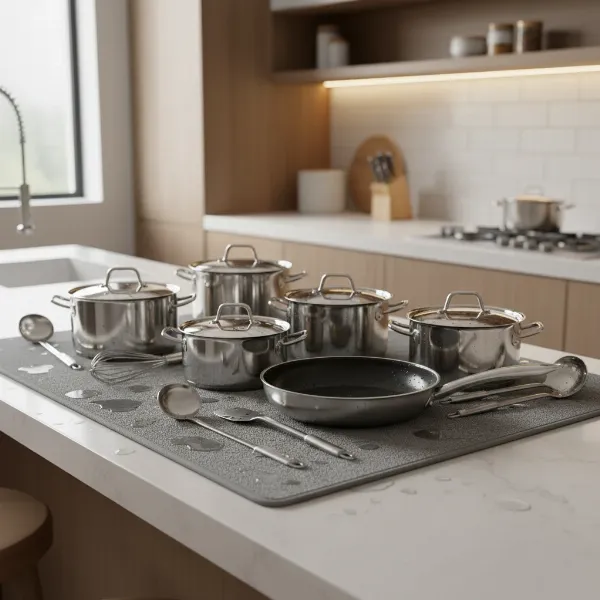 A large, grey microfiber drying mat filled with various pots, pans, and kitchen utensils on a clean kitchen countertop
How to Choose the Right Large Drying Mat
Choosing the perfect large drying mat involves a thoughtful assessment of your specific kitchen environment, habits, and preferences. It’s about finding a mat that not only performs exceptionally but also integrates seamlessly into your daily life. A good mat should be a helper, not another item to manage.
Determine Your Usage Needs:
First, consider where the mat will be placed and how often you’ll use it. If it’s for daily heavy loads of pots and pans, maximum absorbency and durability are key. Evaluate your typical dishwashing volume and the available countertop space around your sink or dish rack. Your budget will also guide your choices; setting a realistic price range helps narrow down options without compromising essential features.
Select the Right Material:
Based on your priorities, choose a material that best suits your lifestyle. For superior water absorption and cushioning, microfiber is an excellent choice. If hygiene, quick-drying, and heat resistance are paramount, silicone mats with their ribbed surfaces are hard to beat. Diatomaceous earth offers rapid drying and antibacterial properties for those who prioritize speed and a modern aesthetic, but remember their fragility.
Choose the Appropriate Size and Style:
Measure your available counter space to ensure the mat fits without overwhelming your kitchen. Large mats typically range from 18×24 inches to 20×30 inches or even larger, providing ample room for cookware. Consider the mat’s shape and design—rectangular mats maximize space, while over-the-sink versions can be great for smaller kitchens. The style should complement your kitchen’s decor, whether you prefer minimalist, colorful, or patterned options.
Verify Product Quality:
Always inspect the product quality. Look for sturdy construction, reinforced edges, and consistent material thickness. Ensure there are no strange chemical odors, which can indicate poor manufacturing or unsafe materials. Reading customer reviews can provide valuable insights into real-world performance, durability, and any potential issues like staining or mildew. Prioritize mats made from safe, non-toxic materials, especially if they will be in contact with food preparation areas.
Where to Buy Large Drying Mats
Finding the perfect large drying mat is easier than ever, with a variety of retail options catering to different shopping preferences. Whether you prefer to see products in person or browse from the comfort of your home, you’ll find plenty of choices.
For a hands-on experience, visit home goods stores and supermarkets. These retailers often stock a selection of popular brands and materials, allowing you to feel the textures and visualize the sizes. You can compare products side-by-side and often benefit from immediate purchase. For a wider selection and competitive pricing, e-commerce platforms like Amazon, Wayfair, or specialized kitchenware websites are excellent resources. Online shopping provides access to countless brands, detailed product descriptions, and extensive customer reviews, helping you make an informed decision. Look out for mats explicitly labeled “large,” “XL,” or “jumbo” to ensure they meet your needs for pots and pans.
Tips for Using and Maintaining Your Large Drying Mat
Proper use and consistent maintenance are key to extending the life of your large drying mat and ensuring it remains hygienic and effective. Following these simple tips will help keep your mat in top condition, preventing odors and premature wear.
Regular Cleaning is Essential: For microfiber and cotton mats, machine washing is usually recommended. Follow the care instructions, typically using cold water and a mild detergent. For silicone and diatomaceous earth mats, a quick rinse with warm, soapy water or a wipe-down is often sufficient, and silicone mats can frequently go into the dishwasher. Regular cleaning prevents the buildup of bacteria, mildew, and stains.
Ensure Proper Drying: After each use, or certainly after washing, make sure your mat dries completely. Hang microfiber and cotton mats in a well-ventilated area. Silicone mats dry quickly on their own due to their non-absorbent nature and airflow design. For diatomaceous earth mats, simply allowing them to air dry in an open space is crucial to maintain their rapid absorption capabilities. Proper drying is the best defense against unpleasant odors and microbial growth.
Avoid Harsh Cleaning Agents: Stick to mild soaps and detergents. Harsh chemicals, bleach, or abrasive scrubbers can damage the material, reduce absorbency, or cause discoloration, particularly with microfiber and diatomaceous earth mats. Always refer to the manufacturer’s cleaning recommendations.
Replace Periodically: Even with the best care, drying mats have a lifespan. Over time, absorbency can decrease, materials can degrade, or persistent stains may set in. Consider replacing your mat every 1-2 years, or sooner if you notice signs of excessive wear, persistent odors, or a decline in performance. This ensures your kitchen always has an effective and hygienic drying solution.
Large Drying Mat Price Guide (Updated 2026)
Understanding the typical price ranges for different types of large drying mats can help you budget effectively for your next kitchen upgrade. Prices can vary based on material, brand, size, and additional features, but this guide provides a general overview of what to expect in 2026.
| Mat Type | Size (Approx.) | Price Range (USD) |
|---|---|---|
| Microfiber | Large (18″x24″) | $10 – $25 |
| Microfiber | Extra-Large (20″x30″) | $15 – $35 |
| Silicone | Large (16″x20″) | $15 – $30 |
| Silicone | Extra-Large (18″x24″) | $20 – $40 |
| Diatomaceous Earth | Large (16″x20″) | $25 – $50 |
| Diatomaceous Earth | Extra-Large (18″x24″) | $35 – $60+ |
| Cotton | Large (18″x24″) | $8 – $20 |
| Wool | Large (16″x20″) | $40 – $70+ |
Prices are estimates and can fluctuate based on promotions, retailers, and specific brand offerings. Investing a little more in a durable, high-quality mat can often lead to greater satisfaction and a longer lifespan.
Buying Guide: What to Know Before You Buy a Large Drying Mat
Making an informed decision about your large drying mat purchase means considering several factors beyond just aesthetics. Thinking through these points will ensure you select a mat that truly meets your functional needs and fits seamlessly into your kitchen lifestyle. A well-chosen mat should feel like an intuitive extension of your kitchen.
What’s Your Budget?
Before diving into the vast array of options, establish a clear budget. How much are you willing to spend on a large drying mat? Prices can range significantly, from economical microfiber options to premium silicone or diatomaceous earth mats. Define your comfort zone, then compare prices across different stores and brands. Remember that a slightly higher initial investment in a durable, high-performing mat can often save money in the long run by reducing the need for frequent replacements.
Which Material Suits Your Needs?
The material dictates much of a drying mat’s performance and maintenance. Consider your priorities: Do you need maximum absorbency for frequent, large loads? Microfiber might be your best bet. If quick drying, easy cleaning, and mold resistance are paramount, especially in humid environments, silicone is a strong contender. For ultra-fast drying and a modern look, a diatomaceous earth mat could be ideal, but be mindful of its care requirements. Understand the pros and cons of each material to align with your frequency of use and willingness to clean.
What Size and Style Fit Your Kitchen?
Measure your available countertop space accurately. A large drying mat is meant to accommodate substantial items like pots and pans, so ensure it provides ample surface area without crowding your workspace. Rectangular mats are generally most efficient for large loads. Also, think about your kitchen’s overall design aesthetic. Do you prefer a mat that blends in with subtle colors, or one that adds a pop of color or a unique texture? The style should harmonize with your existing decor, enhancing rather than detracting from your kitchen’s appeal.
Which Brands Are Reputable?
Researching reputable brands is a smart step to ensure quality and reliability. Look for brands known for producing durable kitchenware and read customer reviews diligently. User experiences often highlight real-world performance, longevity, and any recurring issues. Established brands often offer better warranties and customer support, providing peace of mind with your purchase. A little investigation can prevent disappointment and ensure you invest in a product that lives up to its promises.
Conclusion
Choosing the best large size drying mat for pots and pans is an investment in a more organized, hygienic, and efficient kitchen. By prioritizing absorbency, durability, ease of cleaning, and the right size, you can effectively manage post-meal cleanup, protect your countertops, and enhance your kitchen’s overall appeal. From the quick-drying capabilities of silicone to the super-absorbent power of microfiber, there’s a perfect mat out there for every home. Make an informed choice, and transform your dish-drying experience today. What innovative ways have you found to keep your large cookware drying efficiently?
Frequently Asked Questions
What dimensions qualify as a “large” drying mat for pots and pans?
Generally, a “large” drying mat for pots and pans measures at least 16×20 inches, with many options extending to 18×24 inches or even 20×30 inches for extra-large capacity. These sizes provide ample space to air-dry multiple big items like casserole dishes, baking sheets, and cutting boards alongside your regular dishes without overcrowding.
Are large silicone drying mats better than microfiber for heavy pots and pans?
For heavy pots and pans, large silicone drying mats often offer superior benefits due to their non-slip grip, heat resistance, and channeled design that promotes airflow. While microfiber absorbs water, silicone allows it to drain, preventing items from sitting in pooled water and making it easier to dry bulky, heavy items quickly and hygienically.
How do you prevent mold and mildew on large drying mats?
To prevent mold and mildew on large drying mats, always ensure they are fully air-dried between uses, especially microfiber and cotton types. Silicone mats are naturally mold-resistant due to their non-absorbent surface. Regular cleaning with soap and water, and occasional sanitizing, are crucial, as is hanging or placing the mat in a well-ventilated area to dry after each use.