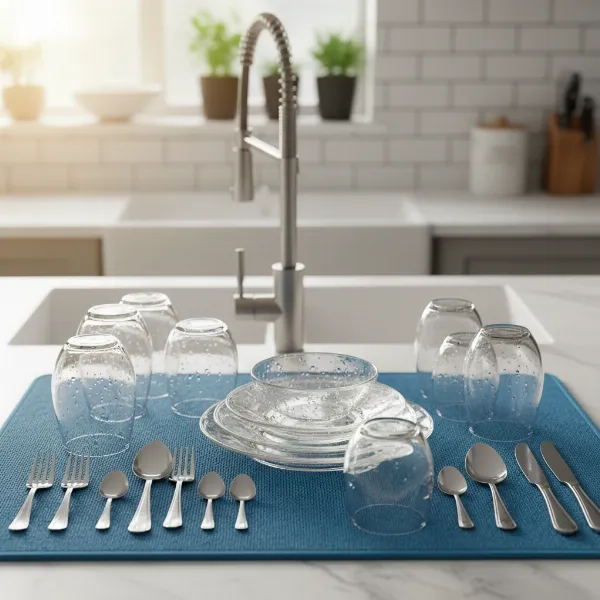
Have you ever noticed your favorite bath mat or kitchen mat just isn’t soaking up spills like it used to? It feels soft to the touch, perhaps even fluffier than before, yet water seems to bead right off it, leaving puddles rather than disappearing into the fibers. This frustrating phenomenon is a common consequence of a seemingly innocent laundry additive: fabric softener. While designed to make textiles feel luxurious and reduce static, fabric softener harbors a secret that actively works against the very function of absorbent mats, rendering them less effective with each wash. Understanding this mechanism is the first step toward restoring your mats’ full potential and keeping your home drier and safer.
The Science Behind Fabric Softener’s Detrimental Effects
Fabric softeners, whether liquid or dryer sheets, are formulated to leave a residue on your laundry, imparting that signature softness and fresh scent. However, this very mechanism is what spells trouble for items whose primary job is to absorb moisture. Over time, this buildup creates a formidable barrier that compromises the core function of your absorbent mats.
How Fabric Softeners Work (and Why It’s Bad for Mats)
|
Our Picks for the Best Kitchen absorbent mat in 2026
As an Amazon Associate I earn from qualifying purchases.
|
||
| Num | Product | Action |
|---|---|---|
| 1 | S&T INC. Dish Drying Mat XL, 18” x 24”, Absorbent Microfiber Kitchen Counter Mat, Dish Drying Pad for Dishes, Utensils, Pots and Pans, Extra Large, Charcoal |

|
| 2 | WISELIFE Dish Drying Mat Super Absorbent Drying Mat Large Dish Drying Mats for Kitchen Counter Easy Clean Dish Mat Kitchen Drying Mat15"x 18" Stylish Grey |
|
| 3 | HotLive Dish Drying Mat for Kitchen Counter, Heat Resistant Drainer Mats with Non-slip Rubber Backed, Hide Stain Kitchen Super Absorbent Draining Mat, Easy to Clean Dish Rack Pad, Dark Grey 16"x18" |
|
| 4 | GORILLA GRIP Ultra Water Absorbent Microfiber Dish Drying Mat, Quick Dry Thick Mesh, Slip Resistant Pad for Sink Dishes or Under Rack, Kitchen Counter Accessories, Machine Wash Mats, 18x16 Inch, Black |
|
| 5 | AMOAMI Dish Drying Mat for Kitchen Counter-Coffee Mat Bar Accessories, Hide Stain, Rubber Backed, Absorbent, Fit Under Coffee Maker, Espresso Machine, Pot, Dish Rack, 12"x19", Dark Grey |
|
| 6 | GORILLA GRIP Ultra Water Absorbent Microfiber Dish Drying Mat, Quick Dry Thick Mesh, Slip Resistant Pad for Sink Dishes or Under Rack, Kitchen Counter Accessories, 16x18, Machine Wash Mats, Gray |
|
| 7 | YDKGL Water Absorbent Runner Rugs for Kitchen, Kitchen Mat in Front of Sink, Oil Absorbent Kitchen Mats for Floor,Non-Slip Kitchen Rugs,Durable Kitchen Mats,17x30 Gray Kitchen Rugs, |
|
| 8 | YDKGL Kitchen Rugs Mat Non Slip Washable, Super Absorbent Kitchen Mats for Floor, Rubber Backing Soft Braided Standing Floor Mats Sink Mat Runner Rug, Easy to Clean and Maintain, Brown 17"x30" |
|
| 9 | StepRite Kitchen Mats, 2PCS Kitchen Rugs, Cushioned Anti Fatigue Kitchen Mats for Floor, Non-Slip Standing Desk Mat, Waterproof Kitchen Rug Set for Kitchen, Floor, Office, 17.3"x30"+17.3"x47", Black |
|
| 10 | Ecotrim - Dish Drying Mat for Kitchen Counter | Coffee Bar Mat for Countertops | Heat Resistant Drainer Mat with Non-slip Rubber Backed | Hide Stain Kitchen Absorbent Draining Mat | Dark Grey 16"x18" |
|
Fabric softeners operate by coating individual fibers with a thin, waxy, or oily film. The active ingredients, often cationic surfactants, have a positive electrical charge that allows them to cling to the negatively charged fibers of your laundry. This coating works wonders for static reduction and makes fabrics feel smoother by lubricating the fibers, preventing them from catching on each other. However, for absorbent mats, this lubricating film creates a hydrophobic — or water-repelling — layer. Instead of allowing water to penetrate and be trapped within the mat’s fibers, the water is forced to sit on the surface, unable to soak in effectively. This means your mats aren’t just less absorbent; they become actively resistant to moisture, creating hazards in areas prone to spills.
The Specific Chemicals Involved
The primary culprits in fabric softeners responsible for this absorbency-ruining effect are typically quaternary ammonium compounds, often referred to as “quats,” and various types of silicones. Quats are cationic surfactants that attach to fabric fibers, neutralizing static charges and making the fabric feel softer. Silicones contribute to the smooth, silky feel. Both of these chemical families form a water-resistant film. While beneficial for certain garments where water repellency might be desired, this coating directly interferes with the capillary action essential for wicking away and holding moisture in absorbent materials like cotton or microfiber. This chemical interference fundamentally alters the fiber’s ability to interact with water at a molecular level.
Which Mat Materials Are Most Vulnerable?
Virtually all types of absorbent mat materials are susceptible to the negative effects of fabric softener, but some show the impact more dramatically than others.
| Material | Vulnerability to Fabric Softener | Primary Impact |
|---|---|---|
| Cotton | High | Coating blocks natural wicking ability. |
| Microfiber | Very High | Diminishes open spaces between fibers for absorption. |
| Bamboo/Rayon | High | Similar to cotton, coating hinders natural absorbency. |
| Synthetic Blends (e.g., Polyester) | Moderate | Can still build up, reducing efficacy over time. |
Mats made from natural fibers like cotton, or synthetic materials like microfiber, are particularly vulnerable because their structure relies on open spaces and capillary action to draw in and hold liquid. Microfiber, known for its tiny, split fibers that create a massive surface area for absorption, suffers significantly when these intricate structures are coated and clogged. Cotton’s natural capacity to absorb moisture is also drastically reduced as the softener’s film prevents water from soaking into its cellulose fibers. This coating doesn’t just reduce absorbency; it can also trap dirt and odors, making mats harder to clean thoroughly.
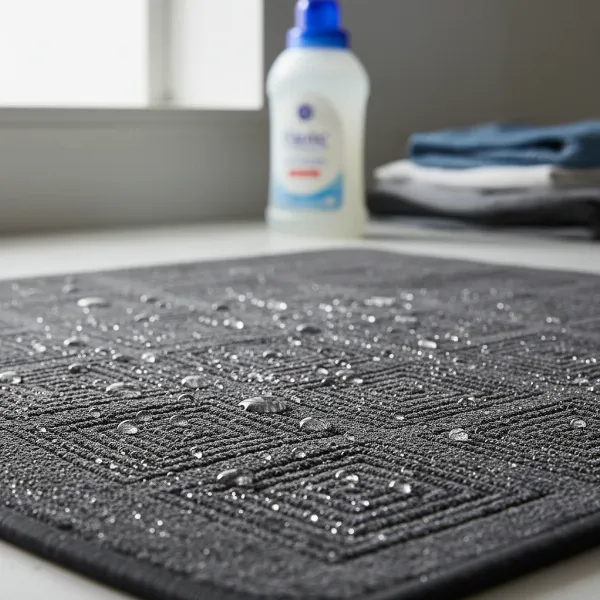 A kitchen mat with water beading on the surface due to fabric softener damage
Restoring Absorbency and Prevention Strategies
While fabric softener damage can seem irreversible, there are effective strategies to both restore a mat’s absorbency and prevent future issues. A proactive approach to laundry care can significantly extend the life and performance of your absorbent mats.
Can You Fix a Fabric Softener-Damaged Mat?
Yes, in many cases, you can restore some, if not all, of your mat’s absorbency. The key is to strip away the built-up fabric softener residue. A popular and effective method involves a vinegar rinse. Wash your mat in hot water with your regular detergent (using less than usual, as detergent can also leave residue). During the rinse cycle, add about half a cup to a full cup of white distilled vinegar to the fabric softener dispenser. The vinegar acts as a mild acid, helping to break down and remove the waxy coating. You might need to repeat this process several times for severely affected mats. Alternatively, a “laundry stripping” method using a combination of borax, washing soda, and detergent in a hot water soak can also be effective for removing stubborn residue.
Best Practices for Washing Absorbent Mats
To maintain optimal absorbency, it’s crucial to adopt a specific washing routine for your mats:
- Wash Separately: Avoid washing absorbent mats with items that lint heavily or, crucially, with anything treated with fabric softener.
- Use the Right Detergent: Opt for a high-quality, liquid laundry detergent. Avoid using excessive amounts, as detergent residue can also hinder absorbency over time.
- No Fabric Softener: This is the most critical rule. Absolutely avoid liquid fabric softeners and dryer sheets when washing absorbent mats.
- Warm Water Wash: Use warm water for most absorbent mats, as it helps dissolve dirt and oils more effectively. Check care labels for specific temperature recommendations.
- Thorough Rinse: Ensure a complete rinse cycle to remove all detergent residue. An extra rinse cycle can be beneficial.
- Drying: Tumble dry on a low heat setting or air dry. High heat can damage fibers and contribute to mat degradation. Avoid over-drying.
“Many people unknowingly shorten the lifespan and effectiveness of their absorbent textiles by using fabric softener. Simplicity in your laundry routine, especially for items meant to absorb, is often the best policy.” – Dr. Emily Chen, Textile Science Specialist
Effective Alternatives to Fabric Softener for Laundry
If you miss the softness or scent that fabric softener provides, several natural and effective alternatives can achieve similar results without compromising absorbency:
| Laundry Additive | Purpose | How to Use | Benefits for Absorbency |
|---|---|---|---|
| White Distilled Vinegar | Softener, Odor Remover | Add 1/2 cup to the fabric softener dispenser during the rinse cycle. | Strips residue, enhances absorbency. |
| Baking Soda | Odor Remover, Brightener | Add 1/2 cup to the wash cycle with detergent. | Neutralizes odors, can mildly soften. |
| Wool Dryer Balls | Softener, Reduces Static | Toss 3-6 balls into the dryer with your laundry. | Physically softens, reduces drying time and static. |
| Essential Oils | Scent Booster | Add a few drops to wool dryer balls before drying. | Imparts natural scent without residue. |
White vinegar is an excellent, cost-effective substitute that helps loosen residue, brighten colors, and neutralize odors without leaving behind the waxy film. Baking soda can also be added to the wash cycle to boost detergent effectiveness, soften water, and eliminate smells. For softness and reduced static in the dryer, wool dryer balls are a fantastic reusable option. If a fresh scent is a priority, add a few drops of your favorite essential oil to the dryer balls before drying.
Choosing the Right Absorbent Mats for Lasting Performance
Selecting the right mat involves more than just aesthetics; it’s about understanding the materials and their inherent properties to ensure long-term absorbency. Making informed choices at the time of purchase can save you headaches and ensure your mats perform their vital function effectively.
Understanding Mat Material Absorbency
Different materials possess varying degrees of natural absorbency, influenced by their fiber structure and weave. Cotton is a classic choice, renowned for its natural absorbency due to its cellulose fibers that readily soak up water. Look for mats with a high pile or loop construction, such as terry or chenille, as these maximize surface area for moisture capture. Microfiber mats, composed of ultra-fine synthetic fibers, are engineered for superior absorbency and quick-drying properties because their numerous tiny spaces can hold a significant amount of liquid. When evaluating mats, consider the density of the fibers; a denser mat often translates to greater absorbency. Always prioritize a material known for its inherent wicking capabilities over one that simply feels soft, as perceived softness can sometimes mask a lack of true absorbency, especially if it’s due to added finishes.
Key Factors When Buying New Mats
When you’re in the market for new absorbent mats, keep these crucial factors in mind to ensure you get a product that performs optimally:
- Material Composition: Prioritize cotton, microfiber, or other materials explicitly marketed for high absorbency. Check the label for blends that might reduce absorbency.
- Care Instructions: Always review the care label before purchasing. Mats that explicitly state “do not use fabric softener” are a clear indicator of their intended function and how to best maintain it.
- Construction: Examine the weave and pile. A denser, more plush construction generally offers better absorbency.
- Durability: High-quality mats will retain their absorbency through many washes, provided they are cared for correctly. Look for sturdy backing and well-stitched edges.
- Purpose and Placement: Consider where the mat will be used. A kitchen mat needs to stand up to grease and spills, while a bath mat needs to handle significant water absorption.
By making an informed decision, you can select mats that are naturally inclined to absorb and will serve you effectively for years to come, without the need for detrimental softeners.
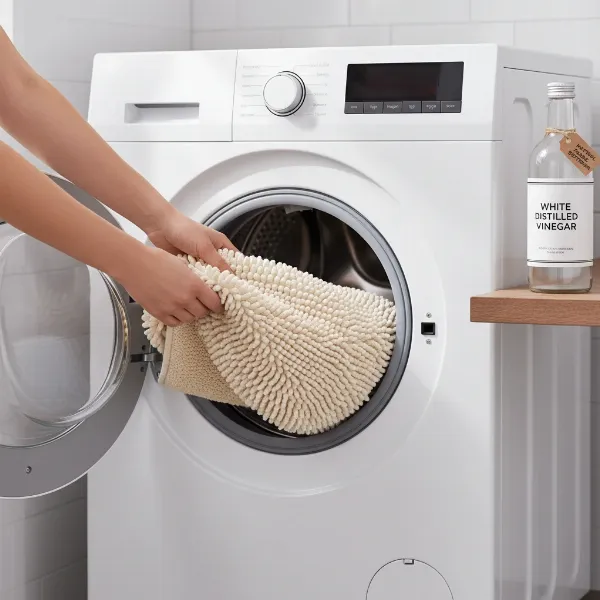 A person placing a mat into a washing machine, next to a bottle of white vinegar
Fabric Softener and Mat Absorbency: Frequently Asked Questions
Why does fabric softener make towels less absorbent?
Fabric softener coats the individual fibers of a towel or mat with a thin, waxy layer. This coating prevents water from penetrating the fibers, effectively making the material water-repellent rather than absorbent. It blocks the natural capillary action required for wicking away moisture.
Can fabric softener build-up be removed from mats?
Yes, in most cases, fabric softener build-up can be removed. Washing the mat in hot water with a cup of white distilled vinegar added to the rinse cycle can help strip away the waxy residue. Multiple treatments might be necessary for heavily affected mats.
Are all types of mats affected by fabric softener?
Absorbent mats, particularly those made of cotton, microfiber, or bamboo, are most significantly affected because their function relies on absorbing water. Fabric softener will diminish the absorbency of virtually any textile designed to soak up liquid, including bath mats, kitchen mats, and cleaning cloths.
What happens if I accidentally use fabric softener on my mats?
If you accidentally use fabric softener, your mats will likely feel soft but will exhibit reduced absorbency, causing water to bead on the surface. The good news is that a single mistake typically doesn’t cause permanent damage, and you can usually restore absorbency with a vinegar rinse.
Are dryer sheets the same as liquid fabric softener in terms of absorbency?
Yes, dryer sheets work similarly to liquid fabric softener by transferring a waxy, lubricating coating to fabrics through heat. This coating will also reduce the absorbency of mats and towels, making them less effective at soaking up moisture.
Is white vinegar a safe alternative to fabric softener?
White distilled vinegar is a safe, natural, and effective alternative. It helps soften fabrics, reduce static, and remove odors without leaving behind the waxy residue that harms absorbency. It also helps clean out residue from your washing machine.
How often should I wash absorbent mats without fabric softener?
Absorbent mats should be washed regularly, typically once a week or more frequently for high-traffic areas or heavy use. Always wash them without fabric softener, focusing on removing dirt and ensuring a thorough rinse to maintain their optimal absorbency.
Conclusion
The allure of soft, freshly scented laundry is strong, but when it comes to absorbent mats, fabric softener is a foe, not a friend. Its waxy, chemical coating actively works against the very purpose of these textiles, turning them from diligent moisture-absorbers into water-repelling barriers. By understanding the science behind this detrimental effect and embracing simple, effective alternatives like white vinegar and wool dryer balls, you can safeguard your mats’ performance and prolong their useful life. Prioritizing proper care not only ensures your mats remain highly absorbent, contributing to a cleaner, safer home, but also reflects an informed approach to laundry that benefits your fabrics, your appliances, and the environment. What changes will you make to your laundry routine for better mat performance and longevity?